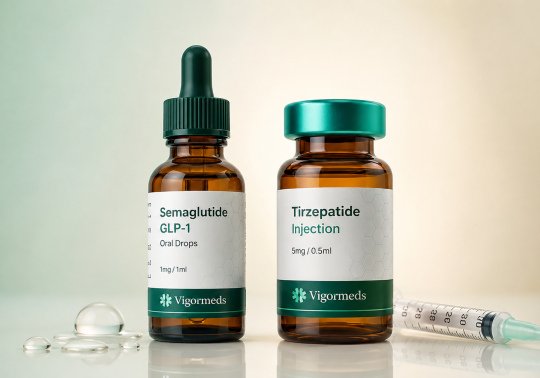
A clear look at GLP-1 vs Tirzepatide before a provider conversation
People often hear the terms GLP-1, semaglutide, and tirzepatide in the same conversation, which can make the topic feel more confusing than it needs to be. GLP-1 vs Tirzepatide is a useful comparison, but it should not be treated as a simple “which one is better?” question. These are medical treatment categories and medication options that should be reviewed with a licensed provider.
The helpful starting point is understanding the basic difference. Semaglutide is commonly described as a GLP-1 receptor agonist. Tirzepatide is different because it acts on two receptor pathways: GIP and GLP-1. That dual-pathway design is one reason tirzepatide is often discussed separately from traditional GLP-1 treatment options.
This article explains the difference in plain English, so people can ask better questions before a provider-reviewed conversation. It does not decide which option fits a person. That depends on health history, goals, eligibility factors, current medications, and medical review.
What GLP-1 means in simple language
GLP-1 stands for glucagon-like peptide-1. It is part of a hormone pathway involved in appetite signals, fullness, digestion, and blood sugar regulation. GLP-1 receptor agonist medicines are designed to work with that pathway.
Semaglutide is one well-known example in this category. In weight-management discussions, semaglutide is often mentioned because certain semaglutide products have FDA-approved uses for chronic weight management when specific criteria are met. Still, the word “GLP-1” is not a single medication. It describes a class or pathway, and different medicines within that space may have different labels, formats, indications, and review requirements.
That is why GLP-1 vs Tirzepatide should begin with definitions. GLP-1 is the pathway or class people often refer to. Tirzepatide is a specific medication that works differently from GLP-1-only receptor agonists because it also activates the GIP receptor pathway.
How tirzepatide is different
Tirzepatide is often described as a GIP and GLP-1 receptor agonist. GIP stands for glucose-dependent insulinotropic polypeptide. Like GLP-1, it is part of a hormone signaling system involved in metabolism. The important point for a general reader is not to memorize the science. It is to understand that tirzepatide is not simply “another GLP-1” in the same exact way as semaglutide.
FDA approved tirzepatide injection for chronic weight management for people who meet specific criteria, including obesity or overweight with at least one weight-related condition, along with reduced-calorie diet and increased physical activity. That approval does not mean tirzepatide is automatically right for everyone. It means the medication has a specific approved use under defined conditions.
When people search tirzepatide vs GLP-1, they are usually trying to understand whether the difference matters. The answer is: it may matter, but only a provider can help connect that difference to a person’s health profile.
| Topic | Semaglutide | Tirzepatide |
|---|---|---|
| General category | GLP-1 receptor agonist. | GIP and GLP-1 receptor agonist. |
| How people often discuss it | As a GLP-1 treatment option. | As a dual-pathway treatment option. |
| What matters before considering it | Provider review, health history, medication profile, and eligibility. | Provider review, health history, medication profile, and eligibility. |
| Best way to compare | Ask how the GLP-1 pathway relates to your care discussion. | Ask how dual GIP and GLP-1 activity may fit into a provider review. |
Why “better” is the wrong first question
It is natural to ask which option is stronger, newer, or more popular. But for medical care, that is not usually the most useful first question. GLP-1 vs Tirzepatide should not be framed as one option being better for every person. Different people bring different health histories, medication lists, goals, preferences, and provider considerations.
A provider may think about several things before discussing GLP-1 treatment options. These may include medical background, current prescriptions, previous weight-management care, metabolic health factors, and whether a treatment is appropriate under the person’s circumstances.
- Is the person’s health history relevant to this category of care?
- Are there current medications that need to be reviewed?
- What goals or questions should be discussed first?
- Does the person meet criteria for a specific care option?
- What follow-up or monitoring may be part of provider-guided care?
This is why semaglutide vs tirzepatide is not a decision to make from a headline. The science is useful, but the provider review is what makes the conversation personal.
GLP-1 vs Tirzepatide: what to ask before choosing assumptions
GLP-1 vs Tirzepatide is a helpful topic when it leads to better questions. It becomes less helpful when it turns into self-diagnosis or a race to choose a medication name. People do not need to become experts before speaking with a provider. They only need to understand enough to ask thoughtful questions.
| Question to ask | Why it helps |
|---|---|
| Is this medication category relevant to my health profile? | It keeps the discussion personal rather than general. |
| What is the difference between GLP-1-only and dual-pathway options? | It helps clarify the science without turning it into a guess. |
| What information do you need before discussing treatment options? | It helps prepare for a more useful review. |
| What kind of follow-up would be needed if an option is appropriate? | It keeps the conversation focused on care, not only medication names. |
| Are there reasons one option may not fit my situation? | It helps avoid assuming that popular means suitable. |
These questions make the conversation clearer. They also help people avoid comparing medical options as if they were ordinary products.
What people often misunderstand about treatment categories
One common misunderstanding is that GLP-1 means one medication. It does not. Another is that tirzepatide is simply a brand-new version of the same thing. That is also too simple. Tirzepatide’s GIP and GLP-1 receptor activity gives it a different profile, which is why it is often discussed separately.
Another misunderstanding is that FDA approval means a medication is right for anyone who is interested. Approval defines how a medication may be used under specific conditions. A provider still needs to review the person’s information before any option is considered.
That is the central point of GLP-1 vs Tirzepatide: the difference is real, but the decision is personal and medical. The comparison can help people understand the language. It should not replace provider-guided care.
Provider-guided care keeps the comparison practical
Provider-guided care is important because it turns general information into a review based on the person’s own situation. Online health content can explain terms. It can show differences. It can help people prepare questions. But it cannot decide what fits a specific person.
For someone who is curious about GLP-1 treatment options, a good provider conversation may cover health history, treatment goals, available options if appropriate, possible follow-up, and cost or insurance questions. The order matters. First comes review. Then, if appropriate, options may be discussed.
This keeps the comparison balanced. GLP-1 vs Tirzepatide is not about choosing the most talked-about option. It is about understanding the difference well enough to have a better provider conversation.
Vigormeds Tip
Before asking about semaglutide vs tirzepatide, write down what you actually want to understand. Is your question about how the medications work? Eligibility? Care format? Follow-up? Cost? Bringing clear questions to a provider-reviewed process can make the conversation more useful.
Vigormeds recommends thinking of GLP-1 vs Tirzepatide as a learning step, not a decision step. The comparison can help you understand the language, while a licensed provider review helps determine what may be appropriate.
A clearer way to compare the options
GLP-1 vs Tirzepatide is a valuable topic when it is explained carefully. Semaglutide is a GLP-1 receptor agonist. Tirzepatide acts on both GIP and GLP-1 receptors. Both belong in medical conversations, not guesswork.
People who want to understand these options should begin with the basics, prepare thoughtful questions, and keep provider review at the center. That way, the comparison becomes useful, calm, and connected to real care rather than online confusion.